7 min read · Updated July 2026 · By Dalton
Owner, Yellow Bird Cleaning — Dalton is the owner of Yellow Bird Cleaning. He works directly with businesses across Florida's Gulf Coast to set up and run dependable commercial cleaning programs, matching each space to the right scope, schedule, and crew.
Restaurant and food-service cleaning: front-of-house done right
In a restaurant, cleanliness is the product as much as the food. A spotless dining room and restroom earn five-star reviews, and a dirty one shows up in both your ratings and your health inspection. This guide covers what professional front-of-house cleaning includes, the zones that matter most, how often it is done, and where the job hands off to specialized kitchen and hood cleaning.
Front-of-house vs. back-of-house: two different jobs
It helps to be clear about scope up front, because 'restaurant cleaning' covers two very different things:
- Front-of-house — the dining room, bar, host stand, entry, windows, and restrooms. General commercial cleaning: floors, surfaces, high-touch disinfection, restroom sanitation, glass, and trash.
- Back-of-house — the cooking line, kitchen equipment, and especially the exhaust hood and grease systems. This is specialized, fire-code-driven work.
A general commercial cleaning crew handles the front-of-house beautifully. Kitchen exhaust and grease cleaning is a separate, certified specialty — more on that below.
The zones guests actually judge you on
Restrooms
Fair or not, guests judge your kitchen by your restroom. A clean, stocked, good-smelling restroom is one of the highest-leverage things in the building — and a dirty one is one of the most common triggers for a bad review.
Floors
Dining-room and entry floors take food, grease tracking, and heavy traffic. Nightly attention keeps them from getting sticky, slippery, or stained, and protects against slip hazards.
High-touch surfaces
Door handles, menus, POS screens, condiment stations, chairs, and tabletops are touched by every guest. These need regular cleaning and disinfection, especially at the entry and payment points.
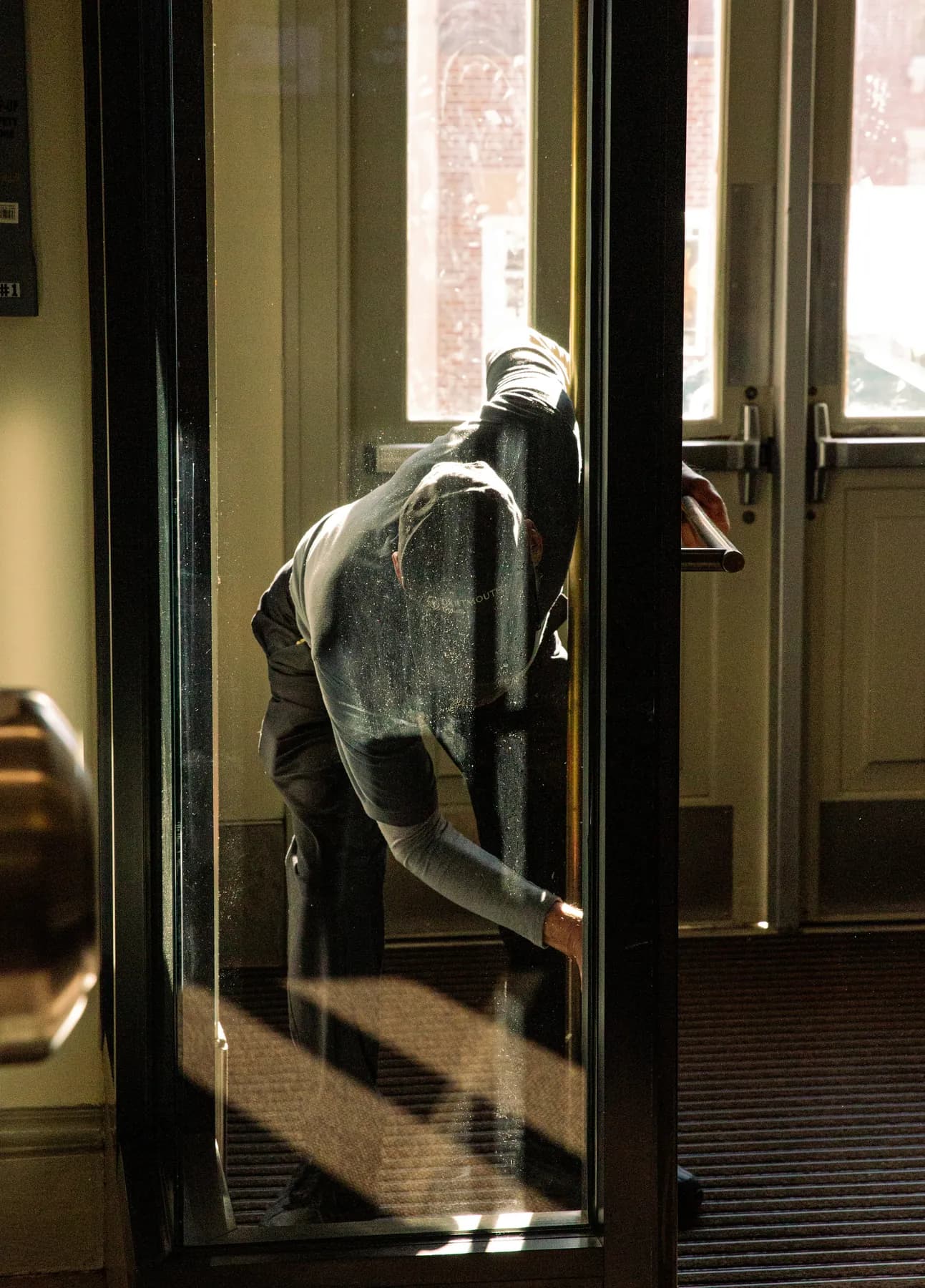
Glass and entry
The front door, windows, and entry set the first impression before anyone sits down — smudge-free glass and a clean threshold matter more than their square footage suggests.
Why the front-of-house standard is also compliance
Front-of-house cleanliness is not just about vibe — dining areas, restrooms, and floors are part of what health inspectors evaluate, and the FDA Food Code expects the whole establishment, including non-food areas and restrooms, to be kept clean. A consistent nightly clean keeps you inspection-ready instead of scrambling before a visit.
How often restaurants need cleaning
- Nightly (after close): full dining-room reset — floors, tables, chairs, restrooms, high-touch disinfection, trash, and glass.
- During service: restroom checks and spill response through the shift, usually handled by staff and backed by the nightly deep clean.
- Weekly: detailed baseboards, vents, light fixtures, and behind and under furniture.
- Periodically: deep floor and tile-and-grout cleaning, and high dusting.
Where kitchen and hood cleaning takes over
One honest boundary worth knowing: the kitchen exhaust hood, ductwork, and grease systems are a fire-safety matter governed by codes like NFPA 96, and they are cleaned by certified hood-cleaning specialists on a set schedule — not by a general cleaning crew. A good front-of-house partner keeps your dining room, restrooms, and floors spotless and will tell you plainly that greasy exhaust systems are a different, specialized job.
Yellow Bird coordinates nightly front-of-house cleaning for restaurants and food-service spaces across the Gulf Coast, and is upfront about where the certified kitchen-hood specialists take over.
Frequently asked questions
How often should a restaurant be professionally cleaned?
Most restaurants get a full front-of-house deep clean nightly after close — floors, tables, restrooms, high-touch surfaces, glass, and trash — with weekly detail work on vents and baseboards and periodic deep floor and grout cleaning. Staff typically handle spot cleaning and restroom checks during service.
What is the difference between front-of-house and back-of-house cleaning?
Front-of-house cleaning covers the dining room, bar, entry, and restrooms — general commercial cleaning. Back-of-house includes the cooking line and, critically, the exhaust hood and grease systems, which are specialized, fire-code-driven work done by certified specialists.
Do general cleaning companies clean kitchen exhaust hoods?
No. Kitchen exhaust hoods, ductwork, and grease systems are a fire-safety matter (governed by standards like NFPA 96) and are cleaned by certified hood-cleaning specialists. A general commercial crew handles front-of-house and non-greasy areas, and should tell you clearly where that line is.
Why do restrooms matter so much in a restaurant?
Guests use the restroom as a proxy for how clean the kitchen is — a dirty restroom is one of the most common reasons for a bad review, and restrooms are also evaluated in health inspections. It is one of the highest-leverage areas to keep spotless.
Does restaurant cleaning affect health inspections?
Yes. Dining areas, floors, and restrooms are part of what inspectors evaluate, and the FDA Food Code expects the whole establishment, including non-food areas, to be kept clean. A consistent nightly clean helps keep you inspection-ready.