6 min read · Updated June 2026 · By Dalton
Owner, Yellow Bird Cleaning — Dalton is the owner of Yellow Bird Cleaning. He works directly with businesses across Florida's Gulf Coast to set up and run dependable commercial cleaning programs, matching each space to the right scope, schedule, and crew.
Office disinfection vs. cleaning: what's the difference?
Cleaning, sanitizing, and disinfecting are three different things: cleaning physically removes dirt and grime, sanitizing reduces germs to a safer level, and disinfecting kills a high percentage of germs on a surface using chemicals and contact time. They're often lumped together, but knowing the difference helps you ask for the right service and focus effort where it counts, on the high-touch points that actually spread illness through an office. This guide defines each term, points to the surfaces that matter most, and explains when disinfection is worth prioritizing.
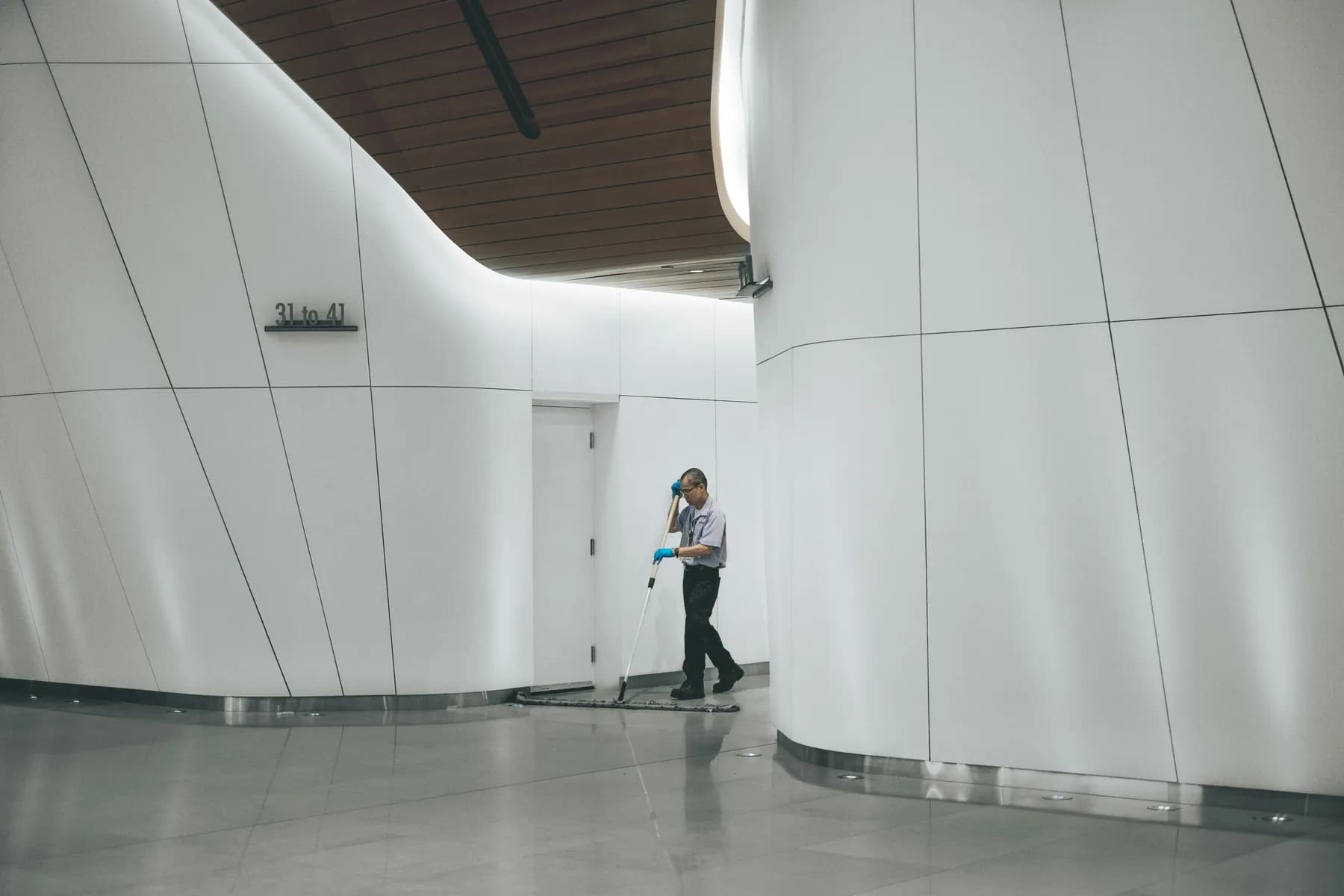
Cleaning vs. sanitizing vs. disinfecting
Cleaning
Cleaning removes visible dirt, dust, crumbs, and grime from a surface, usually with soap or detergent and water. It doesn't necessarily kill germs, but it physically removes many of them along with the dirt they live in. It's the foundation step, and the one people most reliably notice.
Sanitizing
Sanitizing reduces the number of germs on a surface to a level considered safe by public-health standards. It's a middle step, common on food-contact surfaces and shared equipment, where the goal is lowering risk rather than eliminating it.
Disinfecting
Disinfecting uses chemicals to kill a high percentage of germs on a surface. It's the most rigorous of the three and the most situation-dependent. Critically, disinfectants work best on a surface that's already been cleaned, because dirt and grime can shield germs from the chemical.
The practical takeaway: these are a sequence, not substitutes. You clean first, then disinfect the surfaces that warrant it. Spraying disinfectant on a dirty surface wastes the product and leaves germs protected underneath.
The high-touch points that matter most
Germs spread through an office mostly by hands touching shared surfaces. Focusing disinfection on the busiest touch points does far more than disinfecting large, rarely-touched areas like walls. The highest-value targets:
- Door handles, push plates, and pull bars, especially on restroom and entry doors
- Light switches and elevator buttons
- Shared keyboards, mice, and touchscreens
- Phones and conference-room equipment
- Breakroom surfaces: counters, tables, microwave and fridge handles, coffee equipment
- Restroom fixtures: faucet handles, flush levers, stall latches, dispensers
- Shared desks and hot-desking stations
A simple rule: if many different hands touch it many times a day, it belongs on the daily disinfection list. That's where transmission actually happens.
The step everyone skips: dwell time
Disinfectants don't work instantly. Each product has a required dwell time, the number of minutes the surface must stay visibly wet for the chemical to kill germs. It's printed on the label, and it's commonly two to ten minutes. Wiping a surface immediately after spraying may make it look clean, but it often hasn't disinfected anything.
This is the single biggest difference between disinfection theater and real disinfection. A professional crew applies the product, lets it dwell for the labeled time, and then wipes. If you're auditing your own cleaner, asking how they handle dwell time tells you quickly whether they understand what disinfecting actually requires.
When disinfection matters more
Daily cleaning plus high-touch disinfection is a sensible baseline for most offices. But there are times and settings where disinfection should be dialed up:
- Cold and flu season, when illness is circulating and absences climb
- After a known illness in the office, to limit spread
- Shared and high-traffic spaces: hot desks, busy breakrooms, client-facing reception
- Medical, dental, and veterinary offices, where standards are higher and sometimes regulated
- Childcare, food service, and fitness settings, where surface contact is constant
Outside these triggers, blanket whole-office disinfection of every surface usually isn't necessary or cost-effective. Targeted, consistent high-touch disinfection beats occasional deep fogging for everyday risk.
Building it into your cleaning plan
The most effective approach pairs reliable daily cleaning with daily disinfection of the right touch points, and scales up during higher-risk periods. That's more durable than a one-time deep disinfection that fades the moment normal traffic resumes.
If your office is medical-adjacent or runs busy shared spaces, it's worth naming the specific surfaces and protocols you want in your cleaning scope rather than assuming 'disinfecting' is implied. Yellow Bird Cleaning will walk the space and put the disinfection plan in writing so expectations are clear from the first visit.
Frequently asked questions
Does an office need disinfecting every day, or is cleaning enough?
For most offices, daily cleaning plus daily disinfection of high-touch points is the right baseline. Cleaning alone keeps things presentable, but the touch points people share constantly, handles, switches, shared electronics, are where illness spreads, so those benefit from daily disinfection even in a light-cleaning plan.
Is electrostatic spraying or fogging worth it for an office?
Fogging and electrostatic spraying can cover large or complex areas efficiently and are useful after a known illness outbreak or in high-risk settings. For everyday office risk, though, consistent targeted high-touch disinfection usually delivers more value than periodic whole-room fogging. It's a tool for specific situations, not a daily substitute.
Can the same product clean and disinfect at once?
Some products are labeled as both cleaner and disinfectant, but even then the surface should be free of heavy dirt first, and the disinfectant still needs its full dwell time. A genuinely dirty surface usually needs a cleaning pass before disinfection, so 'one and done' works best on already-tidy surfaces, not grimy ones.
How does humidity affect disinfection in Florida offices?
Humidity mainly affects how surfaces dry and how mildew develops, especially in restrooms. It doesn't change the disinfection steps themselves, but it raises the importance of restroom hygiene and good airflow, since damp surfaces and standing moisture invite odor and mildew between cleanings.